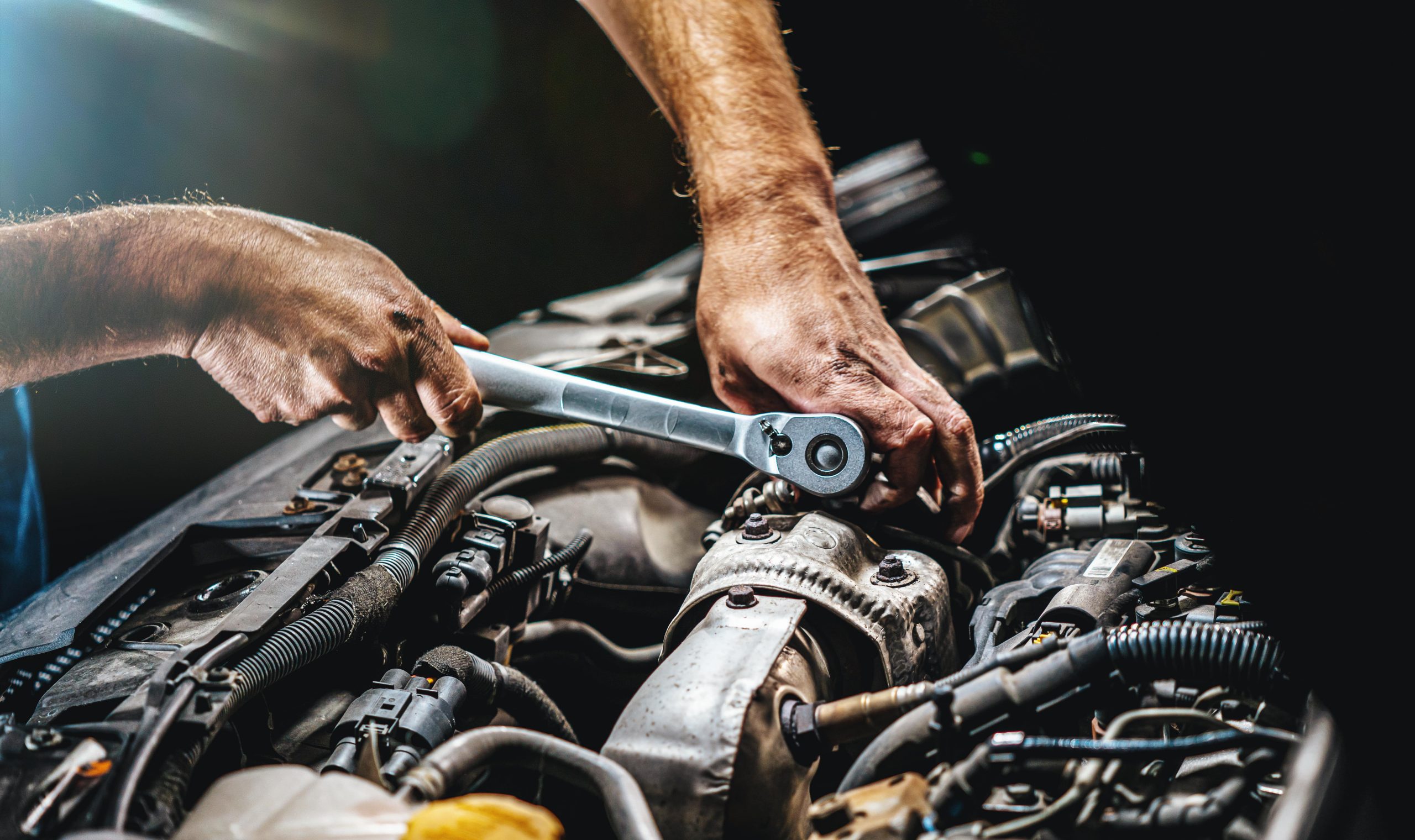
What are the different types of vehicle suspension?

Su

Suspension d'un véhicule

What are the different types of vehicle suspension?

If you own a vehicle, whether it is new, rented or old, you must maintain it regularly. So, even if you are not a fanatic of mechanics, you have undoubtedly heard about the various elements that make up your vehicle and that you must regularly check such as brakes , tires , oil changes or suspension. Indeed, for your safety and comfort, it is important that the suspension of your vehicle is functional and in good condition. Do you want to know more about the suspension of your car, its role and the different types that exist? We explain everything you need to know about the suspension of a car in this article.

Vehicle suspension in detail

The composition of a vehicle’s suspension

You should know that your car’s suspension system is made up of a multitude of parts, the main ones being:

  • The steering knuckle, which supports and pivots the wheel. It serves as a connection between the suspension and the steering.
  • The suspension arm or control arm that attaches the steering knuckle to the vehicle’s frame.
  • The ball joints, which allow the control arm and steering knuckle to move vertically.
  • The suspension springs that allow the suspension arm and wheel to move up and down and thus the vehicle maintains contact with the road at all times.
  • Shock absorbers which prevent the suspension springs from continually bouncing. 
  • Hydraulic fluid.

The role of a car’s suspension

The suspension of a vehicle plays a vital role in its handling. This system will connect the unsprung masses such as the wheels and others to the suspended masses such as the chassis, the engine, etc. Thus, the suspension allows the wheels to maintain maximum grip on the ground by absorbing the effects of shocks when you drive over obstacles such as a pothole or a speed bump, to improve driving and occupant comfort, to ensure the stability of the vehicle and good handling. In addition, it reduces mechanical fatigue and excessive wear of the various components of the car.

Signs of a faulty car suspension

You should stay alert for the various signs that indicate that your vehicle’s suspension is starting to wear out. Here are the main ones:

  • Your tires are worn unevenly. 
  • Your car swerves to the side when you take a turn.
  • Your vehicle seems to bounce when you drive over a bump or pothole.
  • The front of your car lowers when you brake.
  • Conversely, your car appears to be unbalanced towards the rear.
  • You hear a knocking noise when you turn. 

The different types of car suspension

There are many types of suspensions divided into two main families: non-independent suspensions or axles, the oldest system, and independent suspensions, installed today on the majority of vehicles, mainly at the front. The choice of a vehicle suspension system depends on the type of car (sports, touring, luxury, SUV, etc.), its weight and manufacturing costs.

The axles

There are two different types on the market:

  1. The rigid axle, also called a rigid bridge, is a non-independent system, since a guide crossbar connects the wheels together. It is an old model that is very little used nowadays.
  2. The H-shaped semi-rigid axle is often used for the rear axle of economical compact cars. Unlike the rigid axle, the torsion rear axle has a deformable crossbar that connects the wheels together.

Independent suspensions

On this type of suspension, each wheel is independent of the other, allowing the jolts to be contained on the same side. The main ones are:

McPherson type suspension
This is the most commonly used suspension system today for the front axle, mainly for city cars and compact cars, because it is a simple, inexpensive suspension that takes up little space transversely. On the McPherson suspension, each wheel can move vertically without influencing the other. It consists of a single suspension arm and a stabilizer bar called an anti-roll bar that keeps the wheel perpendicular to the ground.

Pseudo-McPherson suspension 
Like the McPherson suspension, it is widely used for the front axle, but what differentiates it is the use of a wishbone arm that maintains the alignment of the strut and provides wheel guidance instead of the anti-roll bar. The pseudo-McPherson suspension is also easy to install, inexpensive and space-saving in transverse direction.

Double wishbone suspension
Double wishbone suspension is mainly used on sports or high-end vehicle models. It is the most efficient suspension system that is also installed on racing cars. Double wishbone suspension consists of an upper wishbone and a lower wishbone to guide the wheel and adjust the anchoring of the various components in order to provide better stability and reduce body roll.

Multi-link suspension
It consists of several anchor arms, usually five, which allow each of the degrees of freedom of the wheel to be blocked independently, the vertical movement being managed by the shock absorber. It is a complex suspension system, difficult to manufacture and quite bulky, which is mainly used for sports vehicles or high-end sedans. The numerous arms, often four positioned transversely and one longitudinal, connect the wheel to the chassis, thus refining the guidance and improving the vehicle’s performance.

Do you want to have the suspension on your car inspected or replaced ? Don’t hesitate to contact the experts at Pneus Groupe Unik in Dorval. These professionals will be happy to inform you about the different types of suspension and which one will be best suited to your vehicle. In addition, they carry out inspections and all repairs of the suspension system on all types of cars with care and professionalism.

10 steps to changing your oil

Changement d'huile

Changement d'huile

10 steps to changing your oil

As the owner of one or more vehicles, you are no doubt aware that there are a number of servicing and maintenance tasks that you must perform regularly in order to maintain your safety, that of your passengers and other road users as well as your driving comfort. Among the various car maintenance tasks to be carried out, several require the intervention of professional and qualified mechanics, this is particularly the case for changing tires every season, wheel alignment or servicing the braking system and many others. On the other hand, some servicing is relatively simple and you can do it yourself, such as topping up the oil or windshield washer fluid or coolant or even tire pressure.

But what to do for changing the engine oil in your vehicle? You are wondering if you can do this maintenance yourself as many people seem to do or if you should go to a specialized garage.

Here is some information to guide you on changing your car’s engine oil.

Changing the oil in your car: what for?

To prevent wear and breakage of engine components, to prevent energy loss, to extend the life of the engine and mechanical components and to help you save fuel.

In order to preserve your engine components and optimize its operation, it is recommended to change the oil and filter every 6,000 to 8,000 kilometers, depending on the make and model of your vehicle. If you drive few kilometers, it is still recommended to perform at least two oil changes per year, generally each season at the same time as changing your tires.
Indeed, after a certain number of kilometers, the oil loses its viscosity, and therefore its effectiveness. It becomes saturated with contaminants and deposits that can accumulate in the engine, causing premature wear.

Additionally, if your vehicle is new, still under warranty, or leased, you must perform the oil and filter change according to the manufacturer’s recommendations in order to maintain the warranty on the vehicle.

The functionality of engine oil and filter

Engine oil helps your vehicle’s engine operate optimally by performing several functions such as:

  • Lubrication of the various components of the engine in order to avoid friction and therefore wear of the parts.
  • Protection of parts from oxidation and corrosion.
  • Cleaning by capturing particles and guiding them to the filter.
  • Cooling of places where the coolant does not render.

The different types of engine oil

There are 3 types of oil that are used for engines:

  • Mineral oil

It is the oldest of the motor oils. It is derived from refined crude oil, contains between 10 and 25% of additives and is the least expensive on the market.

  • Synthetic oil

It is an enriched product that contains fewer impurities than mineral oils. More efficient, it offers better protection to the engine by reducing friction and limiting deposits, which reduces wear and thus reduces fuel consumption. In addition, it is very resistant to low temperatures and is more suitable for modern engines.

  • Semi-synthetic oil

It is a mixture between a mineral oil and a synthetic oil, which however remains less efficient than a synthetic oil.

In any case, you must use the type of oil suitable for your vehicle and recommended by the manufacturer.

Perform your quick oil change in 10 steps

  1. Prepare yourself adequately
  2. Obtain the correct engine oil for the model and make of your vehicle in sufficient quantity and with the correct filter.

  3. Warm up the engine
  4. In order to remove all particles present in the oil, it must be lukewarm. You must therefore drive your vehicle to warm the engine up to its normal operating temperature. Then to avoid burning yourself, turn off the engine and let the vehicle rest for about ten minutes before proceeding.

  5. Secure and lift your car
  6. Park your vehicle on a flat and stable ground. Then make sure to put your car in park or neutral and put the handbrake on. Remember to block the wheels of the vehicle then raise it using a hydraulic jack and maintain the elevation with appropriate supports.

  7. Drain the old oil
  8. First of all, if your car has a splash guard that protects the underside of the car, you will need to remove it in order to access the oil filler cap.
    Make sure to place an oil drain pan or other suitable container directly under the cap to catch the old oil. Unscrew the cap with a wrench, remove it, and let the old oil drain into your container. You will need to wait several minutes for all the oil to drain completely and then replace the oil pan cap.

  9. Remove the old oil filter
  10. Locate and remove the oil filter and drain the remaining oil into your oil pan. Then clean the filter compartment using clean rags.
    Removing the oil filter can be difficult since it is very greasy. You can use a suitable tool such as a socket wrench, a hose clamp wrench, filter pliers, a chain wrench or other tools to make the job easier.

  11. Insert the new oil filter
  12. To ensure a perfect seal, lubricate the round gasket of the new filter with new engine oil. Then put the oil filter on and screw it on.

  13. Add new engine oil
  14. Use a funnel to pour the new oil into the reservoir, according to the amount specified in your manual, then close and tighten the reservoir cap. Make sure you do not overfill with oil, as this can cause damage to your vehicle’s engine.

  15. Start your car
  16. Always run your engine for a few minutes after an oil change. This helps circulate the new oil throughout the engine, including the filter. Additionally, this process allows you to check for and detect any leaks. Also, make sure the oil light is off.

  17. Check the oil level
  18. After letting the engine run for a few minutes, turn it off and let it cool for a few minutes. Then check the oil level with the dipstick. Add some if it is low.

  19. Dispose of used oil
  20. Think about the environment and take your used oil to a recycling center.

Are you not sure you can successfully complete this process? Do you not have the necessary equipment or do you not want to waste time maintaining your vehicle? Call on the experts at Chez Pneus Groupe Unik , who offer you meticulous and quality service at a competitive price to efficiently change your vehicle’s engine oil.

General mechanics: checklist for maintaining your car

Mécanique Générale

Mécanique Générale

General mechanics: checklist for maintaining your car

Whether you have just bought your first car or have owned a vehicle for many years, you must regularly perform its general mechanical maintenance . Indeed, whether your car is new or used or even a collector’s item, it is an essential part of your life that you must take care of in order to avoid breakdowns or costly repairs and allow you to drive safely. If you own a new car, you should know that regular maintenance is mandatory to assert the warranty on it.

So with time and the accumulation of mileage, certain car parts are subject to wear and require regular maintenance in a general mechanics garage or to be done by yourself to function properly. To help you better preserve your vehicle and not forget anything, here is the list of general mechanics maintenance to be carried out.

Vehicle maintenance to be carried out in a general mechanics garage

The frequency of maintenance of your vehicle will vary from one model to another and it can depend on the mileage traveled or the time. However, you will have to take into consideration the first eventuality that occurs. Generally speaking, every 6 months or between 6,000 and 8,000 km, you must do a light service, every year or between 16,000 and 24,000 km, do a more thorough service and when your car reaches 100,000 km, you will certainly have many parts to have serviced and changed.

In addition, certain road and weather conditions such as snow, ice, extreme temperatures, sand, traffic jams, etc. will influence the frequency of servicing. The same applies to your driving style (transporting large loads, towing, sudden braking or acceleration, etc.).

The main maintenance tasks to be carried out in a general mechanical workshop are:

  • Brake system check

It is the safety system of your vehicle that must therefore be continually in perfect working order. To do this, check the discs and brake pads periodically and every year do a general maintenance that includes cleaning, lubrication and adjustment of the moving parts. In addition, if you hear an abnormal noise or feel a strange vibration, do not hesitate to take your vehicle to a general mechanics workshop to prevent any accident.

  • The tires

For good road grip, it is essential to equip your vehicle with high-performance tires. In addition, you are probably aware that in Quebec, you must by law have equipped your vehicle with winter tires between December 1st and March 15th at the very least. So, when it comes time to change your tires, it is best to also have their alignment checked to ensure safe driving and reduce your fuel consumption.
Many general mechanics shops , in addition to offering the sale, installation, alignment and balancing of your tires , will offer you a storage service in their heated garage.

  • Replacing the engine oil and oil filter

You could take advantage of your two annual visits to your general mechanic’s shop for changing your tires to have your car serviced at the same time, including changing the oil and filter in order to preserve the components of your engine and thus optimize its operation.

  • Inspection and replacement of various systems

    • Visual inspection of the exhaust system, suspension and steering and replacement of defective parts.
    • Replacing the air filter and cabin filter every 10,000 km in urban areas and 25,000 km in rural areas.
    • Cleaning the air conditioning system condenser.
    • Checking engine fluids and topping off.
    • Replacing spark plugs for gasoline cars.
    • Automatic transmission check and related repairs if necessary.
  • Major maintenance of 100,000 km

When your car reaches 100,000 km, you will need to perform major maintenance on several important components such as cleaning and possibly changing the timing belt, ignition cable, fuel injectors, among others. In addition, the gearbox oil will need to be changed.

General mechanical maintenance that you can do yourself

  • Between two visits to the general mechanics garage or more regularly, you can carry out relatively simple checks to ensure the proper functioning and good performance of your vehicle. The main ones are:
  • Check the oil and coolant levels from time to time, especially if you notice that your vehicle tends to heat up abnormally.
  • Inspect tire air pressure and wear periodically. Be aware that the minimum tread depth on tires is regulated. It must not be less than 1.6 mm (2/32 in) for a light vehicle and the tread indicator must not touch the road.
  • Check the windshield washer fluid level and refill it regularly. You could use a lot of it to improve your visibility on the road especially in winter.
  • Check the wear level of the wipers and if necessary, replace them. Pay particular attention in the fall, as the summer sun tends to dry out the rubber of the blades.
  • Make sure your horn, lights and signal lights are working properly. A bulb can easily burn out without you noticing, which can result in a fine.
  • Check that the air conditioning and heating system are working properly.
  • Check the battery condition. If you see verdigris, clean it to avoid starting problems.
  • Have your vehicle washed regularly inside and out, including in winter. Indeed, road salt is particularly corrosive for certain parts of your car. In addition, you will have better visibility on the road if the optical globes of your headlights are clean.
  • In the winter, when temperatures drop below freezing, make sure to always keep your fuel tank at least a quarter full. This will prevent condensation and freezing from causing major damage.

For general mechanical maintenance or to have your tires changed every season, trust the professional mechanics at Pneus Groupe Unik in Dorval and make an appointment!

How to choose a car repair garage?

Garage de réparation automobile

Garage de réparation automobile

How to choose a car repair garage?

Do you own one or more vehicles so that all members of your family can move around freely? It doesn’t matter whether your car is new, rented or old, you must take care of it by maintaining it regularly and carrying out the repairs necessary for its proper functioning. Indeed, maintaining a car is essential to avoid breakdowns or more expensive repairs. In addition, it allows you to ensure your safety and that of your passengers. You should also know that for new cars it is mandatory to carry out regular maintenance in a professional garage to assert the warranty on your vehicle.

However, if you don’t know a mechanic and you don’t know who to trust, it’s not always easy to choose a good auto repair garage. Indeed, there are currently many options available to you to carry out repairs and servicing on your car. So, how do you choose your auto repair garage?

Below are some helpful tips to help you.

Some tips to help you choose your future auto repair garage

  • Consider the garage’s specialties

You will find general mechanic garages and others that specialize in certain types of repairs such as tires, steering, braking, suspension or exhaust systems, etc.

Additionally, some shops will perform repairs on vehicles regardless of their type while others specialize in certain brands (like dealership repair shops) or in a type of vehicle (high-end cars, light trucks, etc.).

It is best that you choose an auto repair shop that suits your needs because not only do you benefit from the expertise of the mechanics, but also from a wide selection of quality spare parts.

  • Choose a certified garage

First of all, you must ensure that the garage is certified and that the team of mechanics is qualified. This way, you will be sure to entrust your vehicle to experienced, competent and certified professionals. Indeed, the mechanics must all have acquired a high level of professional training in automotive mechanics and have the technical skills necessary to carry out all the work.

Also, make sure that technicians receive ongoing training to stay up to date on the latest electronic systems. More and more vehicles are now equipped with these complex systems that can be controlled by mini-computers.

You might also see on the walls in some garages the certificates of competence of their mechanics.

  • Choose a well-equipped and organized auto repair garage

A good workshop must have adequate equipment to correctly and efficiently carry out diagnostics and repairs. Indeed, the devices must be adapted to all types of vehicles and be at the cutting edge of technology.

In addition, a quality professional garage will maintain a high level of tidiness and cleanliness in its workshop. Indeed, even if it is very busy, the work spaces will be cleaned regularly.

  • Guarantees and transparency

In a serious and professional auto repair garage, the prices for basic mechanical work such as tire changes, oil changes, filters, battery changes, etc. as well as the hourly rate for labor are always displayed in a clearly visible manner.

In addition, the garage will offer you a guarantee for repairs and parts higher than or equivalent to the law.

  • Prioritize customer service

As a general rule, a professional mechanic will offer you excellent service. The garage manager will take the time to listen to you and explain in detail the problem as well as any repairs that need to be carried out. A good mechanic will be happy to guarantee you a personalized service, to be able to give you practical advice, to talk with you about your vehicle, because above all, he is an enthusiast.

  • Ask for advice

Word of mouth is always a very good way to find a professional and reliable auto repair shop. Ask for references around you, from your family, neighbors, friends, etc. this will give you a good indication.

In addition, you can check reviews of a garage’s former customers on Google, Facebook, TripAdvisor or other specialized websites. Look at the specifics of a repair shop, its achievements as well as customer testimonials on the professionals’ website.

To ensure the reliability of a vehicle repair garage, you can also consult the website of the Office de la protection du consommateur du Québec to find out if it has been the subject of complaints in the past.

  • Choose a recommended garage

In Quebec, some garages may be recommended by approved organizations such as CAA Quebec. If you have the choice, it is always preferable to select a vehicle repair garage recommended by this non-profit organization that has carried out certain checks.

  • Choose a garage near you

If you can, choose a garage located near your home or workplace. This will make it easier for you to get around and save you valuable time.

Trust Pneus Groupe Unik, an excellent auto repair garage

At Pneus Groupe Unik, we offer you sound advice, honest diagnostics and impeccable repairs. Whether it’s installing your tires, performing preventive maintenance, repairing the transmission or an electrical problem, our team of professional mechanics only performs the necessary repairs after providing you with a free, clear and precise estimate of the work to be done. Then, it’s up to you to make the decision, there is no pressure or obligation.

Since 1988, Pneus Groupe Unik has been offering you personalized service tailored to your needs. In addition, we have state-of-the-art equipment to provide you with an accurate diagnosis and long-lasting repairs so you won’t have to go back to the garage.

For serious and quality car repairs as well as professional and courteous service, trust Pneus Groupe Unik, your garage in Dorval. Don’t hesitate and make an appointment!