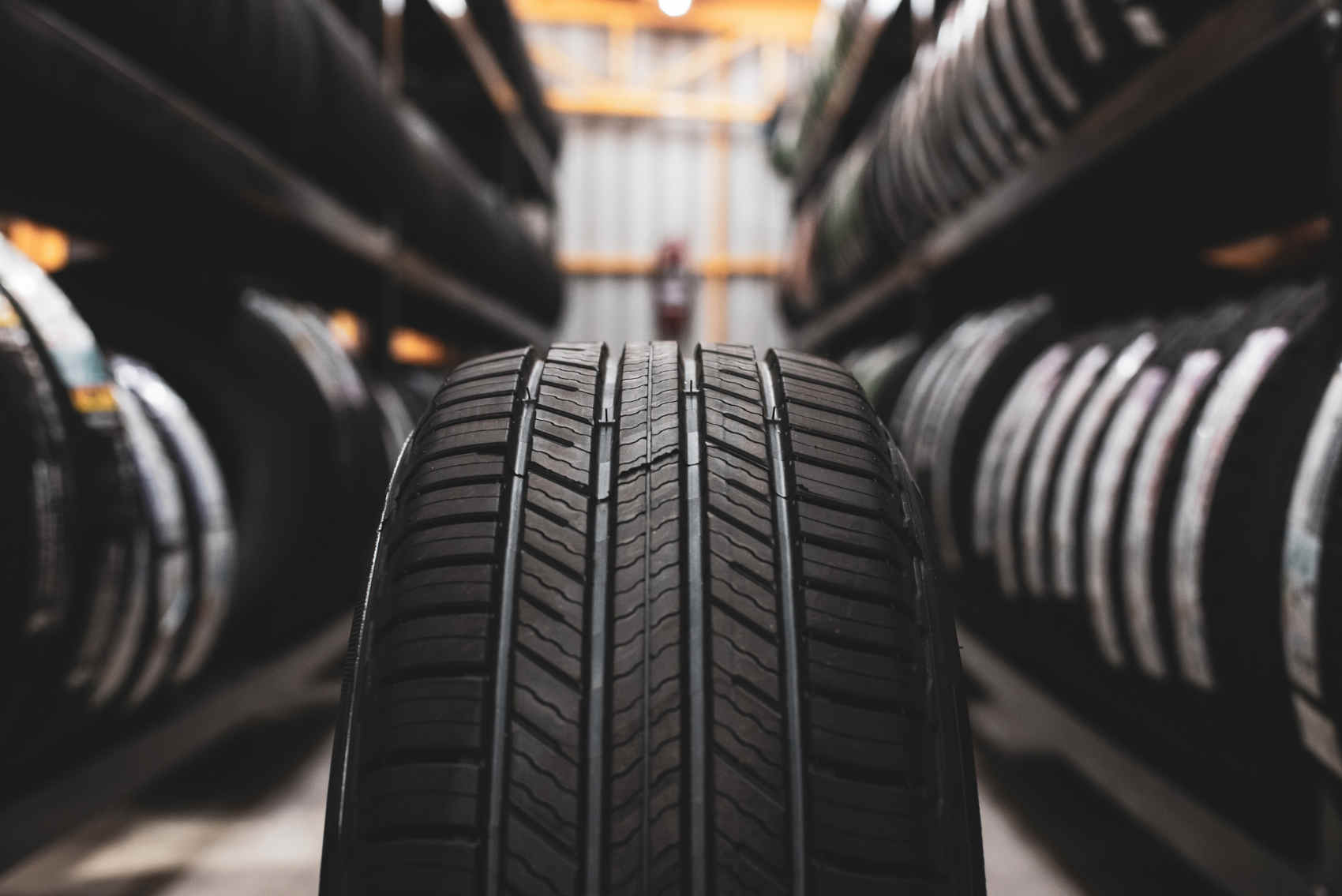
Practical guide to choosing the right tires for your car

bon pneu


bon pneu

Practical guide to choosing the right tires for your car

Are your vehicle’s tires showing signs of wear? So you’re thinking about changing them and wondering which tire is best for your car? Choosing the right tires for your car allows you to ensure safe, comfortable and optimal driving according to your needs and road conditions. Here is a short practical guide to help you choose the right tires for your vehicle.

Characteristics of the main types of tires

Before choosing the right tire for your vehicle, you need to know the different types of tires. Indeed, tires are classified into different categories according to their design, their use and the climatic conditions for which they are optimized. Here are the 3 main ones:

  • All-season tires. They are designed to provide good grip on the road all year round, in moderate conditions. Versatile, they can handle mild temperatures, rain, and even light snow. However, they are not ideal for harsh winter conditions or sporty performance.
  • Winter tires, also called snow tires, are made to cope with low temperatures, snow and ice. Their rubber remains flexible despite the cold, and their deep tread patterns provide better grip on slippery surfaces. They are identifiable by the mountain-shaped logo with a snowflake in the center.
  • Performance tires. They are geared towards sports performance, offering excellent steering precision and maximum grip on dry roads. Often used for sports cars, they have a softer rubber and specific tread patterns. They wear more quickly and are less suitable for cold conditions.

How to choose the best tires for your car?

Choosing the right tires for your car requires considering several factors including:

  • Weather conditions. In Quebec, to ensure excellent road holding in the sometimes extreme conditions during winter, you must by law equip your vehicle with winter tires between December 1 and March 15 at the earliest. In the spring, consider installing all-season tires, because winter tires in summer increase the risk of hydroplaning and braking distances.
  • Vehicle type. If you have a large SUV or 4×4 or a light truck, you may need off-road tires to provide good traction on rough roads. For sports cars, performance tires provide increased grip and precision.
  • Driving style. If you prefer sporty driving, opt for performance tires. On the other hand, for regular driving in the city or on the highway, all-season tires ensure comfort and durability.
  • Your budget. The quality and type of tires influence the price. Investing in tires from the biggest brands on the market like Michelin, BFGoodrich and Uniroyal allows you to save money in terms of lifespan and fuel efficiency.

Are you hesitating between Michelin and BFGoodrich tires? You don’t know which tire is best for your vehicle? Make an appointment with the specialists at Pneus Groupe Unik. These professional mechanics will be able to advise you on finding the best tire for your car according to your needs. 

Tire balancing: Why balance a tire

Équilibrage des pneus

Équilibrage des pneus

Tire Balancing: Why Balance a Tire

As a vehicle owner, whether you have just bought your first car or have owned a car for many years, you are well aware that you must regularly carry out its general mechanical maintenance. Indeed, whether your vehicle is new or used, it is an essential part of your daily life that allows you to get around and even work. You must therefore take care of it in order to avoid breakdowns or costly repairs. In addition, this ensures your safety and comfort on the road as well as that of your passengers and other users. Among the essential elements for the proper functioning of your vehicle, apart from the engine, we find the wheels and tires. The latter require special maintenance and attention, because they ensure the grip of your vehicle on the road. Among the various adjustments that are part of wheel geometry, tire balancing is essential. We explain why you should balance your tires and what it consists of in this article.

Tire balancing: what does it involve?

For good road grip, it is essential to equip your vehicle with high-performance, well-balanced tires. Thus, tire balancing consists of distributing the weight of each individual wheel evenly and equally around its axis of rotation and around the entire circumference of the tire.

Why balance a tire?

The wheels, and therefore the tires of your vehicle, when you drive, are subjected to many shocks and various vibrations that are due to the hazards of driving such as the aging of the tires by the friction of the road, the wear of the suspension, the loosening of certain parts, the shocks and jolts on the wheels if you hit a pothole or a curb chain, etc. In order to avoid vibrations of the car and prevent premature wear, the wheel and the tire must always be balanced. This allows the center of gravity to be exactly in the center of the axis of rotation and to distribute the mass evenly around it. Be aware that even new tires need to be balanced, because they always have a slight imperfection that requires balancing. In addition, poorly balanced tires can cause various problems such as:

  • Driving discomfort
  • Uneven tire wear
  • Premature wear of suspension components
  • Premature wear of steering components

When should you balance your tires?

It is recommended by professionals to have your wheels balanced as part of regular maintenance, every 10,000 to 15,000 km. In addition, for your safety, you should perform wheel and tire balancing when:

  • You have your tires changed every season. In fact, in Quebec, according to the law in force, you must have equipped your vehicle with winter tires between December 1st and March 15th at least for safety reasons on the road in the harsh winter conditions (snow, ice, black ice, etc.).
  • You buy tires or rims or wheels
  • You are having a tire repaired following a puncture, for example.
  • After driving into a large pothole or hitting a curb.

Causes of Unbalanced Tires

There are several causes that can explain the imbalance of your vehicle’s tires.
The most common are:

  • Normal wear and tear on your tires
  • Driving on rough roads
  • Sudden and repetitive braking
  • Turns taken too quickly
  • Driving into a big pothole
  • And many more

Symptoms of Unbalanced Tires

There are several symptoms that tell you that your vehicle’s tires are out of balance, the main ones are:

  • Your vehicle vibrates abnormally when reaching high speeds
  • The tread on one of your tires shows uneven wear
  • You are experiencing problems with your vehicle’s steering or suspension

How is wheel balancing done?

Professional mechanics can use two methods to balance the tires on a vehicle:

Static balancing, also called old-fashioned balancing, because it is the oldest of the methods used. This technique, relatively simple to perform, is appropriate in cases where the tire has only a slight imbalance. The professional places the wheel and the tire on a vertical support equipped with a laser beam to measure the balance of the tire in relation to its axis of rotation. Then, the specialist places small weights on the horizontal part of the tire, in the edge of the rim, opposite the unbalancing area, until the balance is restored.

Dynamic balancing is used in the most complex cases of tire imbalance. This technique, more effective than static balancing, consists of using a balancing machine with a digital display that can measure the tire on three axes. The professional mechanic places the wheel and tire on the balancing machine and rotates the assembly at various speeds. All imbalances will then be captured by the machine. Thus, once the analysis is complete, the balancing machine specifies the area and the weight that must be used to restore the tire’s balance. Then, the specialist precisely places small steel or zamak (a zinc-based alloy bonded to aluminum, magnesium and copper) masses on the internal or external edges of the rim in order to obtain maximum wheel balancing .

Do you find that your tires are wearing abnormally? Make an appointment with the professional mechanics at Pneus Groupe Unik in Dorval . These specialists perform precise wheel checks and balancing on all types of vehicles. In addition, this general mechanic shop offers the sale, installation, and alignment of high-end tires as well as quality storage service in their heated garage.

Tire installation: How to change your tires

Changement de pneus

Changement de pneus

Tire Installation: How to Change Your Tires

As the owner of one or more vehicles, you know that you must carry out a certain number of revisions and maintenance in order to preserve your comfort and safety as well as those of other road users and your passengers. Among these multiple automobile maintenances to be carried out, some are very simple and basic such as topping up the oil or windshield washer fluid, checking and adjusting the tire pressure, etc. You can do them yourself, but several other mechanical operations are more complex and will require the intervention of professional mechanics such as changing the braking system or changing the oil.

When exactly is it time to install tires on your vehicle? Why change the wheels on your car? Can you install tires yourself or is it better to go to a general mechanic garage? We will answer all your questions regarding the installation of tires on your car in this article.

Everything you need to know about installing tires on your vehicle

Having tires in good condition ensures your safety and comfort on the road.

When to change the tires on your car?

Tires are part of the safety and handling elements of your vehicle. Like all other parts of your car, you will need to replace them after a while, because tires do not last forever. But this is not the only reason to install tires, here are the main ones:

  • Depending on the season : in Quebec, it is mandatory by law to change your car’s tires for winter by December 1st at the latest. In fact, in order to ensure excellent road holding in sometimes extreme winter conditions, your vehicle must be equipped with winter tires specially designed for this purpose. The regulations state that you must leave your winter tires on your vehicle until March 15th. After this date, consider installing your summer or all-season tires, because driving with winter tires in summer can be very dangerous, as they increase the risk of hydroplaning as well as braking distances.
  • Due to a breakage : a puncture, a damaged tire or one that regularly deflates requires you to change it. Remember that your tires must be installed in pairs and have the same brands and the same dimensions.
  • Due to wear : As you drive, your tire wears down as it comes into contact with the road. It is therefore normal to replace it when the tread is worn too much or unevenly.
  • Due to age : the tire has a lifespan of between six and ten years even if you drive few kilometers per year. Also for safety, you will have to replace them after this period.

Steps to install a tire yourself

If you have some mechanical knowledge and the necessary equipment, you can install your tires yourself. Here are the steps to follow:

  • Make sure you have all the necessary equipment: a jack, a road lever, chocks, a torque wrench, and of course your tires mounted on rims.
  • Park your vehicle on a flat, stable surface and apply the handbrake.
  • Loosen the nuts slightly by turning them about half a turn using the wheel wrench.
  • Place the chocks on the other wheels of the vehicle.
  • Place the jack under the car, resting it on the frame near the wheel to be replaced.
  • Jack up the car to clear the wheel from the ground.
  • Unscrew the nuts completely, holding the wheel in place so that it remains straight.
  • Remove the wheel.
  • Clean the surfaces between the wheel and the hub.
  • Place the new wheel, pushing it firmly against the hub.
  • Tighten the bolts firmly, but not completely.
  • Lower the car back down and remove the jack.
  • Finish tightening the bolts once the wheel is on the ground. Make sure you don’t overtighten them so that the wheels are properly centered.
  • Once you have all your wheels on, don’t forget to check your tire pressure.

The advantages of going to a garage to have your tire installed

By choosing to bring your vehicle to a certified and qualified professional garage to carry out the tire installation, you will benefit from many advantages, the main ones being:

  • Simplicity and peace of mind. Bringing your vehicle to a professional garage to have your tires fitted is undoubtedly the simplest and least stressful solution. Indeed, nothing could be easier for you: you make an appointment, go to the garage, wait for the installation to be completed and leave with complete peace of mind.
  • Excellent customer service. Generally speaking, the mechanic knows his customers and their vehicles well. He will take the time to listen to you, advise you on the condition and possible change of tires on your car according to your needs.
  • Professional service. Avoid technical errors that could cost you dearly and entrust your vehicle to experts. In a professional garage, the mechanics are certified and qualified. In addition, they are regularly trained in automotive mechanics and have the skills necessary to carry out all work on various types of vehicles safely and efficiently, such as installing tires.
  • Quality equipment. Professional garages have all the necessary and adequate equipment to correctly and efficiently install tires as well as align and parallelism.
  • Top brand tires. A professional garage will offer you a wide selection of top tire brands such as Michelin, Uniroyal, BF Goodrich, Dunlop, Hankook, GoodYear, Toyo Tires, Yokohama, Pirelli, Firestone, Federal Tires and Nokian Tyres.
  • A storage service. Expert garages offer to store your tires in ideal conditions, protected from heat and humidity. Very practical if you do not have enough suitable storage space at home.
  • Additional services. The garage not only installs tires on your vehicle, but also performs various checks such as oil level, brake wear, wheel alignment, filter wear level, etc.

To install tires on your vehicle safely, quickly and at a competitive price, trust the expert mechanics at Pneus Groupe Unik. In addition, they offer a wide selection of high-quality tires as well as an unparalleled storage service.